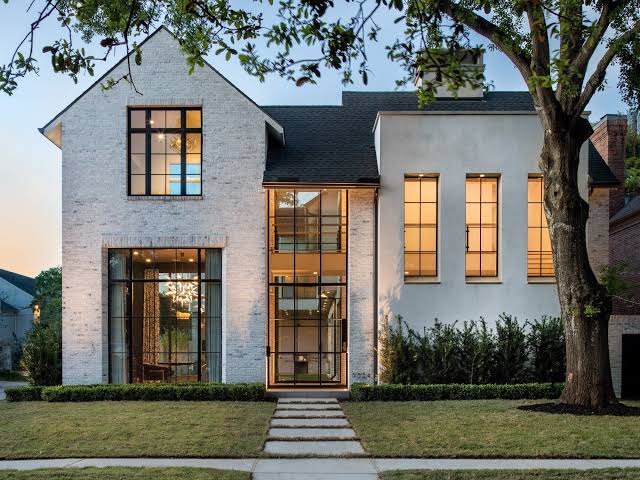
West University Place is a city, not a neighborhood — and its residents will correct you on the point with some warmth.
Incorporated in 1925 and long known as the "City of Homes," West U covers about two square miles inside the Loop with its own city hall, its own police and fire departments, and a civic culture unusually invested in the details. Sidewalks are maintained. Trees are inventoried. The result is a place with a level of upkeep that is immediately legible the moment you turn off Kirby.
The original housing stock was modest — 1920s and 1930s bungalows on 50-foot lots, built for a Houston that was still finding its footing. Beginning in the 1990s, a sustained rebuilding wave transformed the inventory into custom two- and three-story homes in traditional, Colonial, Tudor, and increasingly transitional and contemporary idioms. Many are architect-designed. Many carry elevators, wine rooms, and rear-loaded garages worked carefully into the constrained lot. What has not changed is the street grid, the canopy, and the density of pedestrians at any hour.
The location explains much of the demand. The Texas Medical Center — the largest medical complex in the world, with more than sixty institutions and tens of thousands of employees — sits directly east, a drive most residents measure in single-digit minutes. Rice University's wooded 300 acres form the northeastern boundary. Rice Village, the shopping district at the neighborhood's edge, has been the area's commercial heart since the 1930s and now holds a strong roster of restaurants, boutiques, and the kind of coffee shop where you will run into someone you know.
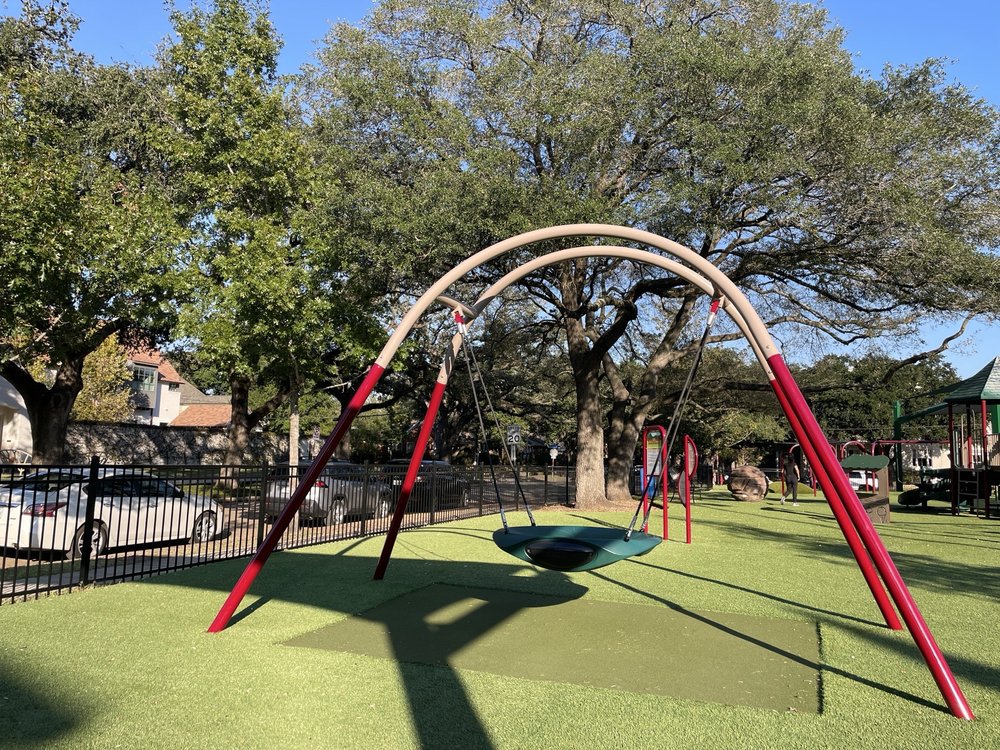
Parks are central to civic life here: Colonial Park with its pool and recreation center, Whitt Johnson Park, and a network of small green spaces threaded through the grid. The Weekley Family YMCA operates one of the busiest branches in the region.
Hermann Park, the Museum District, and the Houston Zoo are minutes north. Downtown is under fifteen. The Galleria, about the same going the other direction.
West U asks a premium per square foot, and the market has never wavered on paying it. What buyers are purchasing is proximity, permanence, and a city of two square miles that behaves as though it is being graded.
21,304 people live in West University Place, where the median age is 41 and the average individual income is $133,325. Data provided by the U.S. Census Bureau.
Total Population
Median Age
Population Density Population Density This is the number of people per square mile in a neighborhood.
Average individual Income
There's plenty to do around West University Place, including shopping, dining, nightlife, parks, and more. Data provided by Walk Score and Yelp.
Explore popular things to do in the area, including Jmh Market & Cafe, The Bistro, and Jennie Elizabeth Hughes Park.
| Name | Category | Distance | Reviews |
Ratings by
Yelp
|
|---|---|---|---|---|
| Dining | 0.03 miles | 0 reviews | 0/5 stars | |
| Dining | 0.89 miles | 0 reviews | 0/5 stars | |
| Active | 0.46 miles | 0 reviews | 0/5 stars | |
| Active | 0.54 miles | 0 reviews | 0/5 stars | |
| Active | 0.59 miles | 2 reviews | 4/5 stars | |
| Active | 0.82 miles | 0 reviews | 0/5 stars | |
| Beauty | 0.54 miles | 0 reviews | 0/5 stars | |
| Beauty | 0.88 miles | 0 reviews | 0/5 stars | |
| Beauty | 0.88 miles | 1 review | 5/5 stars | |
| Beauty | 0.89 miles | 1 review | 5/5 stars | |
| Beauty | 0.98 miles | 0 reviews | 0/5 stars | |
| Beauty | 1.05 miles | 0 reviews | 0/5 stars | |
|
|
||||
|
|
||||
|
|
||||
|
|
||||
|
|
||||
|
|
West University Place has 8,439 households, with an average household size of 3. Data provided by the U.S. Census Bureau. Here’s what the people living in West University Place do for work — and how long it takes them to get there. Data provided by the U.S. Census Bureau. 21,304 people call West University Place home. The population density is 7,338 and the largest age group is Data provided by the U.S. Census Bureau.
Total Population
Population Density Population Density This is the number of people per square mile in a neighborhood.
Median Age
Men vs Women
Population by Age Group
0-9 Years
10-17 Years
18-24 Years
25-64 Years
65-74 Years
75+ Years
Education Level
Total Households
Average Household Size
Average individual Income
Households with Children
With Children:
Without Children:
Marital Status
Blue vs White Collar Workers
Blue Collar:
White Collar: